
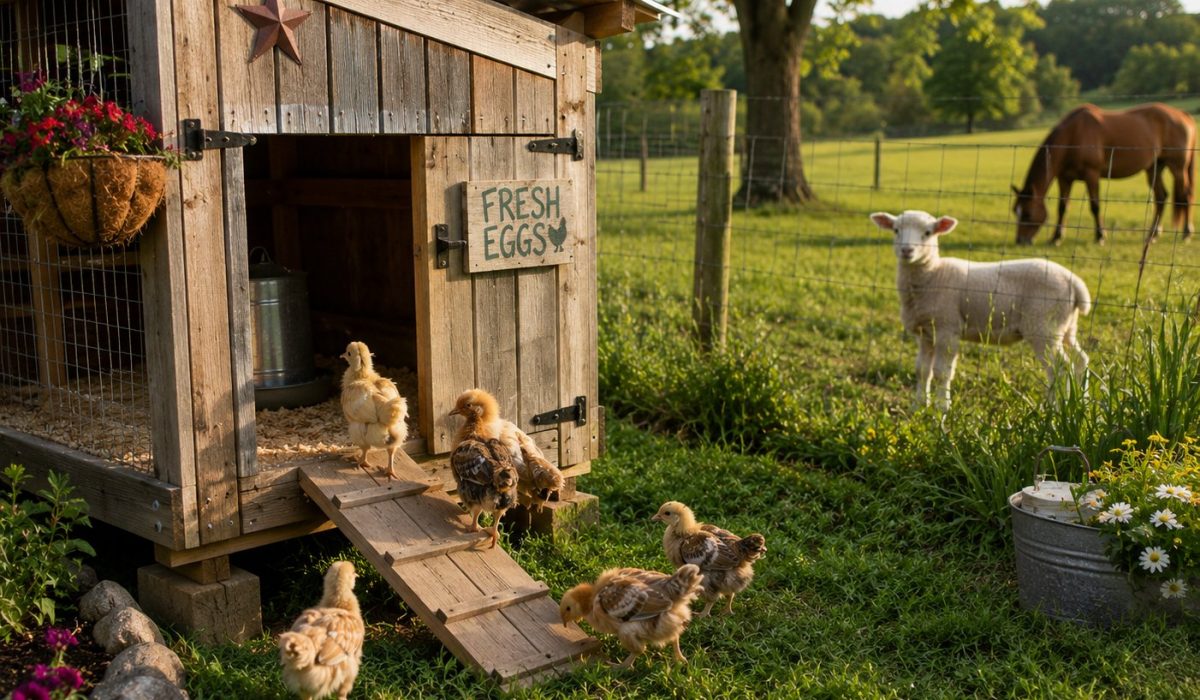
Moving Your Chickens Outdoors
After several weeks of brooder care, young chicks eventually outgrow their indoor space and become ready for life outdoors. This transition is one of the most rewarding stages of raising backyard chickens, but it also requires careful preparation to keep your growing flock safe, comfortable, and healthy.
Most young chickens are ready to move outside once they are fully feathered, usually around six to eight weeks of age depending on breed and weather conditions. Before moving birds outdoors full-time, it is important to have a secure coop and enclosed area ready for them to explore and roost safely.
Chicken coops come in many styles and sizes, ranging from simple homemade structures to elaborate pre-built models. Some owners enjoy building their own coop using recycled materials or custom plans, while others prefer the convenience of ready-made coops available through farm stores and online retailers. No matter the style, every coop should provide protection from weather, predators, and nighttime drafts while still allowing good ventilation.
Inside the coop, chickens need roosting bars where they can perch at night. Roosts are typically placed higher than the nesting boxes because chickens naturally prefer sleeping off the ground. Nest boxes provide quiet, sheltered spaces where hens can lay eggs comfortably. A common guideline is one nesting box for every three to four hens.
Feeding and watering areas should be kept clean, dry, and easy for birds to access. Many owners place feeders and waterers inside covered runs or protected coop areas to reduce waste and keep food dry during rain or snow. As chickens grow older, their feed changes from starter feed to grower feed and eventually to layer feed designed for egg production.
Predator protection becomes extremely important once chickens move outdoors. In suburban neighborhoods, loose dogs and cats can sometimes threaten chickens, while rural areas may also include raccoons, foxes, coyotes, hawks, owls, weasels, and even bears in some regions. Secure coops with locking doors and strong wire fencing help protect birds during both daytime and nighttime hours.
Some chicken owners prefer free-ranging, allowing birds to roam the yard during the day before returning to the coop at night. Free-ranging gives chickens more exercise and natural foraging opportunities, but it also increases exposure to predators and potential escape problems. Others choose enclosed runs that provide outdoor access while keeping birds safely contained.
Fencing plays a major role in creating a secure outdoor space. Standard chicken wire may help contain chickens, but stronger welded wire or hardware cloth is often recommended for predator protection. Fences may also need overhead netting or covered sections if hawks and climbing predators are common in your area. Some active breeds can fly surprisingly well, so taller fencing may be needed to prevent escapes.
With thoughtful planning and proper protection, moving chickens outdoors becomes an exciting milestone that allows your flock to enjoy fresh air, sunshine, scratching, and natural flock behavior. Many owners find that watching chickens explore their outdoor home quickly becomes one of the most enjoyable parts of backyard chicken keeping.
Posted in raising-chickens by Erik Johansson