
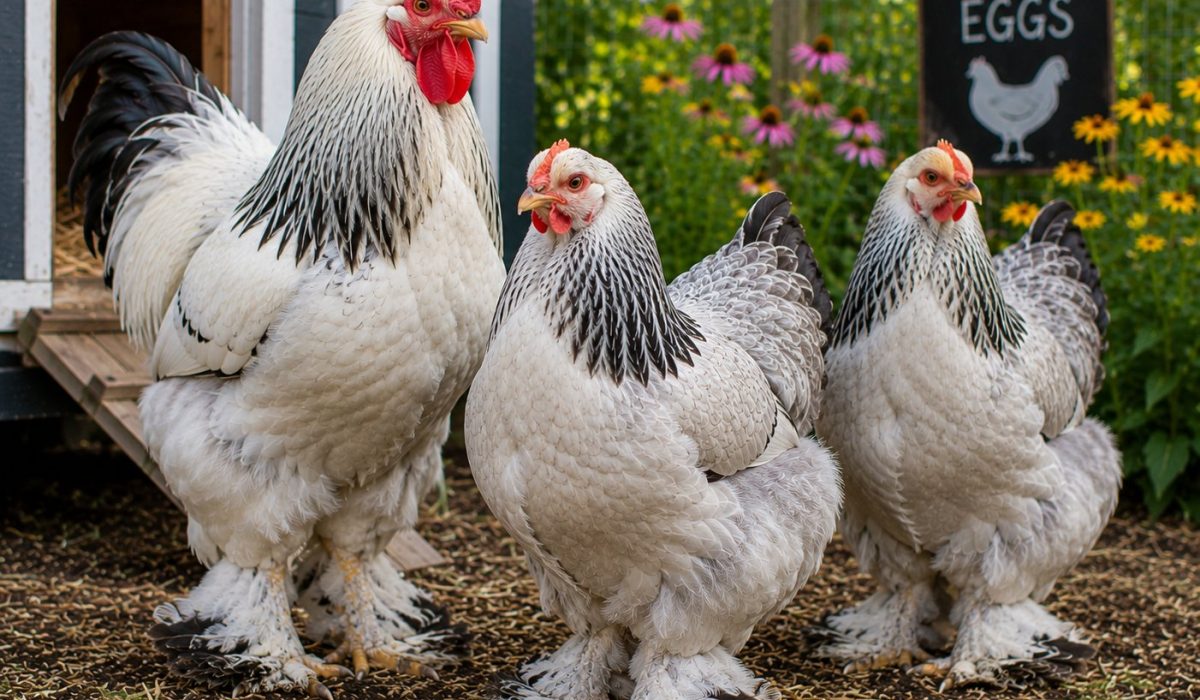
Brahma Chickens
Brahma chickens are often called the “gentle giants” of the chicken world because of their impressive size, calm personalities, and striking appearance. With their large bodies, feathered legs, and soft expression, Brahmas have become increasingly popular among backyard chicken owners who want birds that are both beautiful and easy to manage.
The breed was developed in the United States during the 1800s using large birds originally imported from Asia. Brahmas quickly gained popularity for their size, cold-weather hardiness, and dependable nature. At one time, they were considered one of the primary meat-producing breeds in America before modern commercial breeds became common.
Today, Brahmas are especially popular in backyard flocks because of their friendly temperament and unique appearance. Despite their large size, most Brahmas are known for being calm, gentle, and tolerant around both people and other chickens. Many owners consider them one of the best breeds for families and children because they are usually easy to handle and less flighty than smaller breeds.
One of the most recognizable features of Brahmas is their feathered feet and legs, which give them a soft, almost majestic appearance. Their broad bodies, upright posture, and thick feathering make them stand out in any flock. Popular color varieties include Light Brahma, Dark Brahma, and Buff Brahma.
Brahmas are considered a dual-purpose breed, valued for both egg production and their large body size. Hens typically produce around 150 to 220 medium-to-large brown eggs each year. While they are not the heaviest layers compared to breeds such as Leghorns or Golden Comets, they are dependable producers and often continue laying well during colder winter months.
Their cold-weather hardiness is one of the breed’s biggest advantages. Thick feathering and large body mass help Brahmas tolerate harsh winters better than many lighter breeds. In snowy climates, however, owners should monitor their feathered feet to prevent mud or ice buildup.
Because of their size, Brahmas require slightly more space than smaller breeds, especially around roosts and nesting areas. Lower roosting bars are often recommended to help prevent leg injuries when jumping down from high perches.
Within mixed flocks, Brahmas are usually peaceful birds that rank well socially without excessive aggression. Their calm nature helps them integrate easily with many other backyard breeds.
Brahmas also tend to mature more slowly than lighter egg-laying breeds, but many owners feel their gentle personalities and impressive appearance are well worth the wait. Watching these large birds calmly move through a backyard flock often becomes one of the highlights of raising chickens.
For backyard chicken keepers looking for friendly, cold-hardy birds with a dramatic appearance and calm temperament, Brahmas remain one of the most admired and rewarding breeds available today.
Posted in breeds by Erik Johansson