
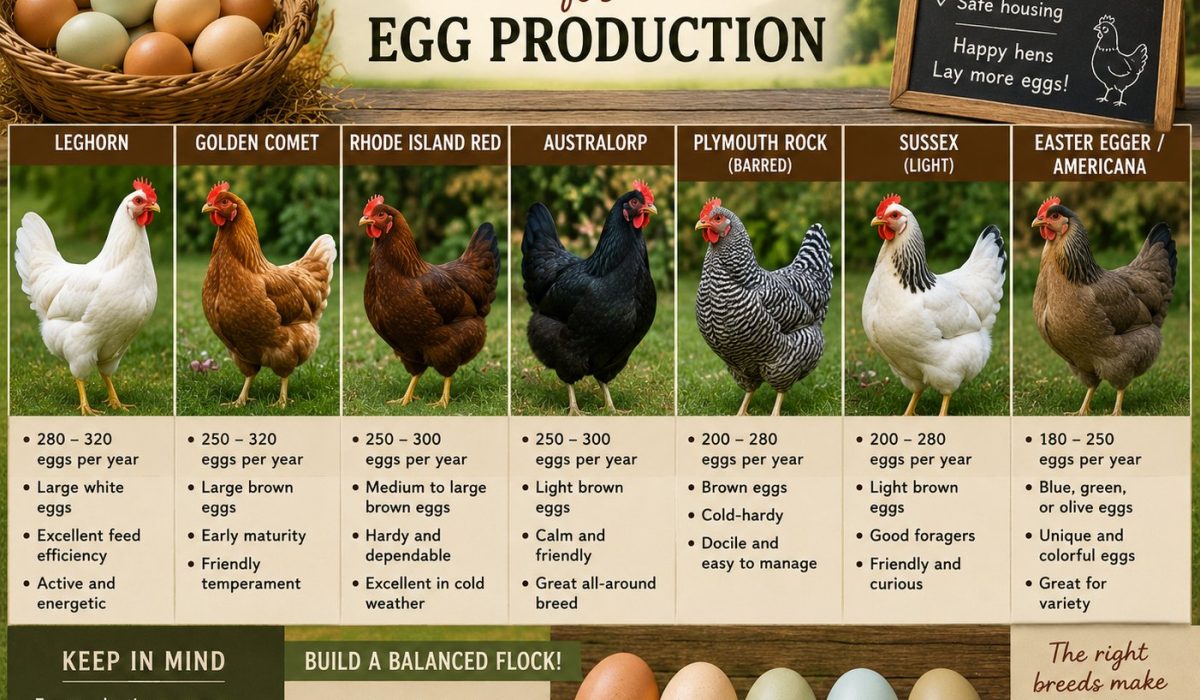
Best Breeds for Egg Production
For many backyard chicken owners, egg production is one of the main reasons for keeping a flock. While nearly all hens lay eggs, some breeds have been selectively developed to produce far more eggs than others. Choosing the right breed can make a significant difference in how many eggs end up in the nest box each week.
If your goal is a steady supply of fresh eggs, these breeds consistently rank among the best producers.
Leghorn
The Leghorn is often considered the champion of egg production.
A healthy Leghorn hen can produce:
-
280 to 320 eggs per year
-
Large white eggs
-
Excellent feed efficiency
Leghorns are active, energetic birds that convert feed into eggs exceptionally well. They have been used extensively in commercial egg operations for generations because of their remarkable productivity.
If maximum egg numbers are your primary goal, Leghorns are hard to beat.
Golden Comet
Golden Comets are among the most popular backyard egg layers.
Typical production:
-
250 to 320 eggs annually
-
Large brown eggs
-
Early maturity
Golden Comets often begin laying at a younger age than many traditional breeds and are known for their friendly personalities. They combine excellent production with a calm temperament, making them ideal for families and first-time chicken owners.
Rhode Island Red
Rhode Island Reds remain one of the most dependable backyard breeds available.
Typical production:
-
250 to 300 eggs annually
-
Medium-to-large brown eggs
-
Excellent cold-weather performance
Their combination of hardiness, adaptability, and consistent egg production has made them a favorite for more than a century.
Australorp
Australorps earned worldwide recognition for their egg-laying ability.
Typical production:
-
250 to 300 eggs annually
-
Light brown eggs
-
Calm, friendly temperament
Australorps combine beauty, productivity, and gentle personalities, making them one of the most balanced breeds for backyard flocks.
Plymouth Rock
Plymouth Rocks, particularly Barred Rocks, are dependable layers and excellent family birds.
Typical production:
-
200 to 280 eggs annually
-
Brown eggs
-
Cold-hardy and easy to manage
They may not match Leghorns in total production, but they offer a great combination of eggs, personality, and versatility.
Sussex
Sussex chickens are often overlooked when discussing top egg layers.
Typical production:
-
200 to 280 eggs annually
-
Light brown eggs
-
Excellent foraging ability
They are known for maintaining production through much of the winter and for their friendly, curious personalities.
Easter Eggers and Ameraucanas
These breeds are popular less for the quantity of eggs and more for the colorful eggs they produce.
Typical production:
-
180 to 250 eggs annually
-
Blue, green, aqua, or olive-colored eggs
A basket filled with colorful eggs often becomes the highlight of the backyard flock.
Production Isn't Everything
Many new chicken owners focus entirely on annual egg counts, but there are other factors worth considering:
-
Temperament
-
Climate adaptability
-
Free-ranging ability
-
Appearance
-
Longevity
-
Family friendliness
A breed that lays 260 eggs per year and is enjoyable to own may be a better choice than a breed that lays 300 eggs but is difficult to manage.
Building the Ideal Egg-Laying Flock
Many experienced chicken keepers choose a mixed flock rather than relying on a single breed.
A balanced flock might include:
-
Golden Comets for maximum production
-
Rhode Island Reds for reliability
-
Australorps for temperament
-
Easter Eggers for colorful eggs
This approach provides excellent egg production while adding variety and personality to the flock.
The Bottom Line
If your primary goal is filling the egg basket, Leghorns, Golden Comets, Rhode Island Reds, and Australorps consistently rank among the best choices.
However, the "best" breed often depends on your goals. Some owners want maximum production. Others value colorful eggs, friendly personalities, or birds that thrive in a particular climate.
Fortunately, today's backyard chicken keepers have more excellent choices than ever before—and with the right breeds, a small flock can provide fresh eggs for many years to come.
Posted in eggs--profit by Erik Johansson